


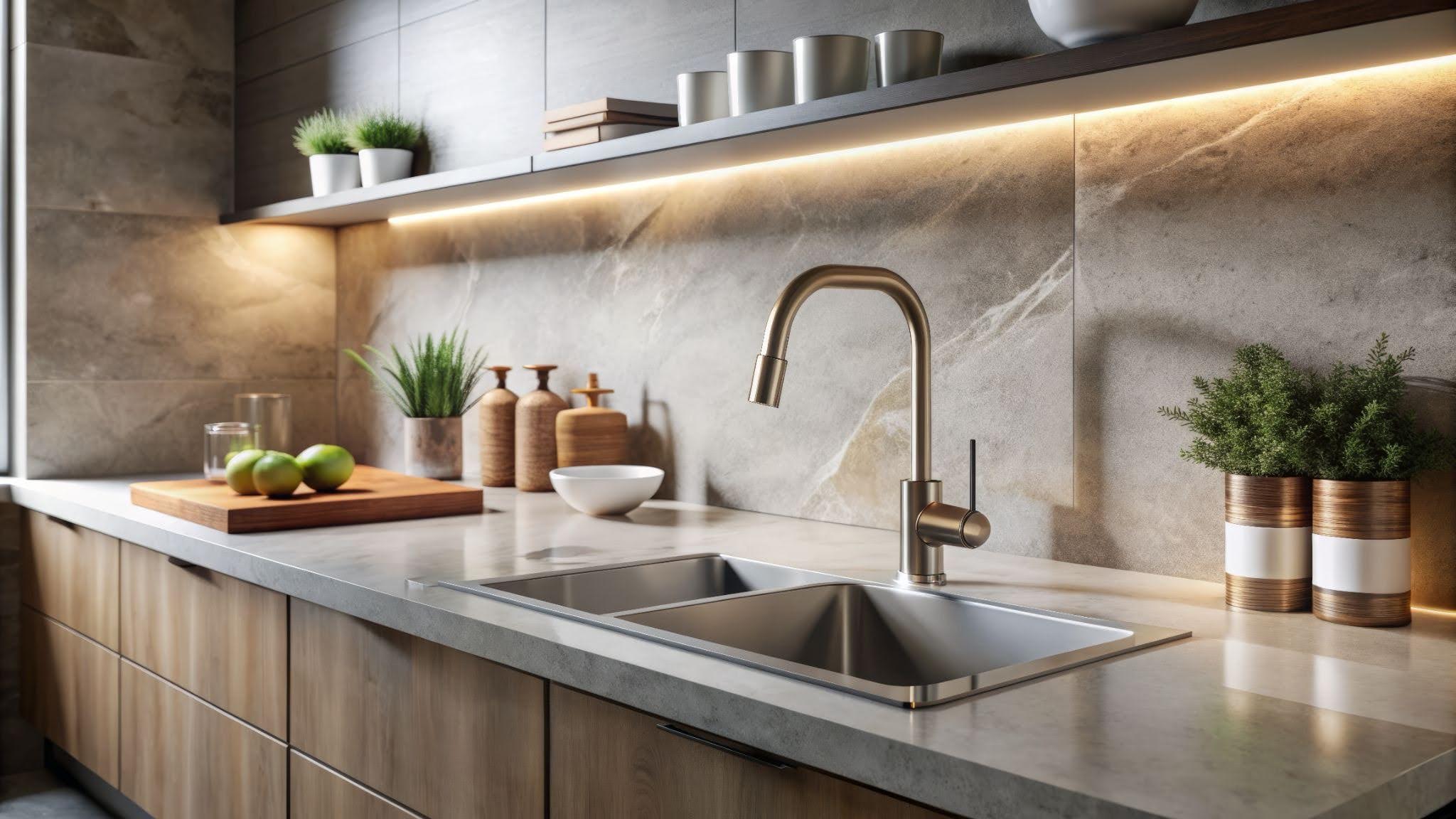
When you're replacing kitchen countertops, the sink shouldn't be a last-minute decision. The sink style you choose affects the countertop opening, your daily cleanup routine, available workspace, and the finished appearance of one of the busiest areas in your kitchen.
At All-Pro Floors, we help you consider countertops alongside the other elements that make your kitchen functional. If you're upgrading your kitchen in the Dallas-Fort Worth Metroplex, understanding the differences between an undermount and drop-in sink can help you make the right decision before your countertops are finalized.
What Is an Undermount Sink?
An undermount sink is installed beneath the countertop, leaving the countertop edge visible around the sink opening.
With no top-mounted rim sitting on the counter, this configuration creates a clean transition between the countertop and sink.
An undermount sink may appeal to you if you want:
A streamlined countertop appearance
Easy countertop cleanup
The countertop material to remain visually prominent
A contemporary or transitional kitchen design
If you're investing in new countertop materials, an undermount sink can be particularly attractive because more attention stays on the countertop surface itself.
What Is a Drop-In Sink?
A drop-in sink, also called a top-mount sink, is installed into an opening from above. A visible rim rests on the countertop and surrounds the sink.
You might consider a drop-in sink if you prefer:
A clearly defined sink perimeter
A more traditional sink configuration
A sink style that works naturally with your overall kitchen design
Neither style is automatically right for every kitchen. Your countertop material, maintenance preferences, design goals, and everyday routine should guide the choice.
Undermount vs Drop-In: Which Is Easier to Clean?
This is one of the biggest everyday differences between the two designs.
Cleaning Around an Undermount Sink
Because there isn't a top-mounted rim around the sink opening, you can wipe crumbs and water from the countertop directly toward the basin.
If you cook frequently or prepare meals on the counter beside your sink, you may appreciate that uninterrupted surface.
Cleaning Around a Drop-In Sink
With a drop-in design, you'll clean around the visible rim where the sink meets the countertop.
That doesn't necessarily make a drop-in sink difficult to maintain. It simply creates another edge to consider when wiping down your counters.
Think about how often you use the sink area rather than making your decision solely from showroom appearance.
Your Countertop Material Should Influence Your Sink Decision
The sink and countertop need to work together.
With an undermount sink, the countertop edge around the opening remains visible, making fabrication and material selection particularly important.
If you're still comparing countertop options, evaluate the sink configuration at the same time.
Quartz Countertops
Quartz is worth considering if you want a durable, low-maintenance countertop. Its relatively consistent appearance can also complement the clean lines associated with an undermount sink.
Granite Countertops
If you prefer natural variation, granite gives the sink area distinctive color and movement. With an undermount design, the stone remains visually prominent around the opening.
Granite requires more maintenance than quartz, so include those care requirements in your overall decision.
Marble Countertops
Marble offers distinctive natural veining and an elegant appearance but requires more careful maintenance.
If your sink area receives constant use, consider whether marble's maintenance needs fit your everyday routine before deciding on the complete countertop and sink combination.
Choose Your Sink Before Final Countertop Planning
One of the most important things you can do is finalize your sink early.
Don't wait until countertop decisions have already been completed to start thinking about the sink.
Before final measurements and fabrication, settle important choices such as:
Sink type
Sink dimensions
Sink location
Faucet configuration
Countertop material
Relevant countertop design details
Your countertop needs to be planned around the actual configuration you're installing.
Late changes can complicate a project unnecessarily, so make the sink part of the countertop conversation from the beginning.
Sink Size Matters as Much as Mounting Style
It's easy to focus entirely on undermount versus drop-in and overlook the actual size of the sink.
Think about what you regularly wash.
If you use:
Large skillets
Oversized pots
Baking sheets
Large serving dishes
A larger basin may make everyday cleanup easier.
But bigger isn't automatically better. Your sink occupies space that could otherwise provide uninterrupted countertop workspace.
Finding the right balance is especially important if you're working with a smaller kitchen or placing the sink in an island.
Think Carefully About a Sink in Your Kitchen Island
If you're planning an island sink, consider the entire surface before deciding where it belongs.
Ask yourself:
Where will I prepare food?
Where will I serve meals?
Will people sit at the island?
How much uninterrupted workspace do I want?
Will the sink become visible from adjoining living areas?
A large sink positioned in the middle of an island can divide one generous work surface into smaller zones.
That may work perfectly for your routine, but it should be an intentional decision.
Consider How the Sink Looks From the Rest of the Kitchen
Many DFW kitchens have open layouts where the sink and island are visible from nearby dining or living areas.
An undermount design tends to keep the visual emphasis on the countertop because the sink rim doesn't sit on top of the surface.
A drop-in sink creates a more clearly defined visual boundary around the basin.
Consider how that detail fits with your:
Cabinet style
Countertop edge
Faucet finish
Backsplash
Flooring
Overall kitchen design
Small details become much more noticeable when several rooms share the same sightline.
Coordinate Countertops With Your Tile and Backsplash
Countertops and sinks don't exist in isolation.
If you're also updating the backsplash or floor, compare those materials together before finalizing your choices. Browsing tile flooring and backsplash options alongside your countertop selection can help you avoid conflicting colors or patterns.
For example, if you choose a countertop with dramatic veining, a quieter tile may allow the countertop to remain the focal point. If your countertop is subtle, you may have more freedom to introduce character through the backsplash.
The objective isn't to match every surface. It's to make them feel like parts of the same kitchen.
Should You Replace the Sink When You Replace the Countertops?
If you're already removing and replacing the countertops, this is a logical time to evaluate whether the existing sink still fits your plans.
Ask:
Am I happy with the current sink size?
Does the mounting style suit my new countertop?
Does the sink work with how I cook and clean?
Am I changing the faucet or surrounding fixtures?
Will keeping this sink limit the countertop design I want?
You don't need to change something simply because you're remodeling. But you also don't want to design brand-new countertops around a sink you already plan to replace.
Common Sink and Countertop Planning Mistakes
Choosing the Sink Too Late
Finalize your sink before countertop fabrication planning is complete.
Selecting Based on Looks Alone
Think about cleaning, workspace, sink capacity, and how you actually use the kitchen.
Choosing the Largest Sink That Fits
A large basin can be useful, but it also reduces usable countertop area.
Forgetting About Faucet Placement
Consider the sink and faucet as a complete work zone rather than two separate decisions.
Ignoring the Rest of the Kitchen
Your sink should make sense with the countertop, cabinetry, backsplash, flooring, and overall layout.
If multiple parts of your kitchen need updating, exploring flooring and remodeling services can help you plan those surfaces together.
Undermount or Drop-In: Which Should You Choose?
Consider an undermount sink if you value:
A streamlined countertop appearance
Easy countertop-to-sink cleanup
Keeping your countertop visually prominent
Clean lines in a modern or transitional kitchen
Consider a drop-in sink if you prefer:
A visible, defined sink rim
A traditional top-mounted configuration
A design that works well with your chosen countertop and kitchen style
Ultimately, your daily routine matters more than which option happens to be popular. Think about how you cook, clean, and use the sink before deciding.
Plan Your New Countertops and Sink Together
Your sink may occupy only one section of the countertop, but you'll interact with that area every day. Choosing the sink and countertop together helps you create a work zone that looks intentional and functions naturally.
If you're planning new countertops anywhere in the Dallas-Fort Worth Metroplex, start by exploring countertop materials and consider your sink, faucet, backsplash, and flooring before final decisions are made.
When you're ready to discuss your project, request a free in-home estimate or contact All-Pro Floors to start planning your kitchen update.


