


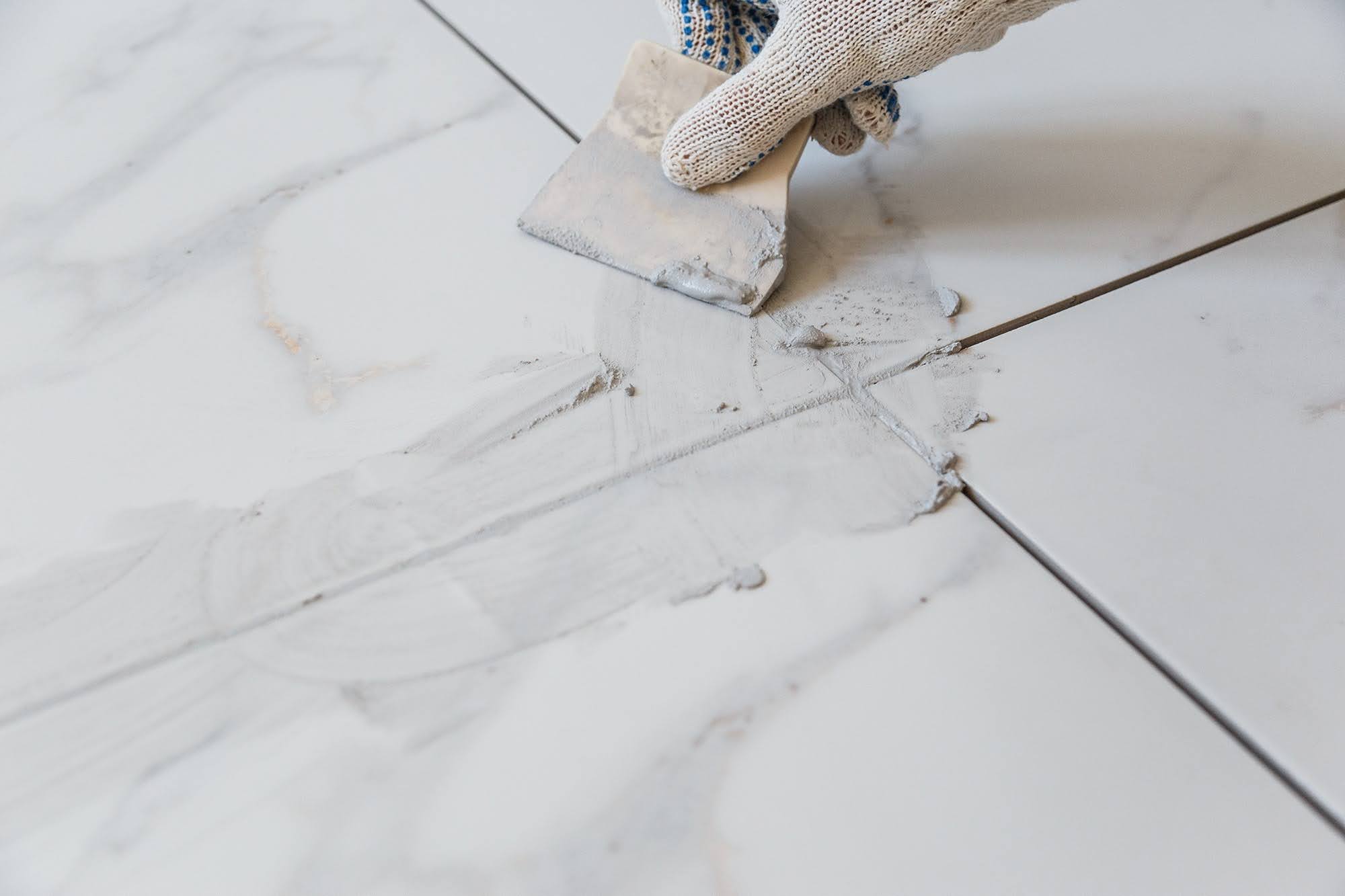
If you're drawn to tile floors with clean lines and minimal visual interruption, you've probably seen installations where the grout joints appear especially narrow and consistent. One way to achieve that streamlined look is with rectified tile.
Rectified tile is manufactured with precisely finished edges, which can support tighter-looking, more uniform layouts when the tile and installation conditions allow. But choosing rectified tile doesn't mean eliminating grout, and the narrowest possible joint isn't necessarily the right choice for every room.
At All-Pro Floors, we help you consider the complete installation, including tile material, size, layout, surface preparation, and grout. If you're planning new tile anywhere in the Dallas-Fort Worth Metroplex, here's what you should know before choosing rectified tile.
What Is Rectified Tile?
Rectified tile is ceramic or porcelain tile whose edges are precisely finished after manufacturing to create more consistent dimensions.
That edge precision is what distinguishes rectified tile.
You can find rectified products in many different styles, including:
Marble-look porcelain
Stone-look tile
Concrete-inspired designs
Contemporary neutral flooring
Large-format tile
Rectified describes the edge treatment, not the pattern, color, or finish of the tile.
When you browse tile flooring options, look at edge characteristics alongside size, surface finish, color variation, and the tile's intended application.
Why Choose Rectified Tile?
The biggest appeal is visual precision.
Because the tile dimensions are more consistent, rectified products can support installations where grout joints appear narrow and uniform.
That can create:
Cleaner visual lines
Less emphasis on individual grout joints
A more continuous-looking floor
A streamlined contemporary aesthetic
This appearance works particularly well in open-concept DFW homes where flooring may continue through kitchens, dining areas, hallways, and living spaces.
Does Rectified Tile Mean Grout-Free Tile?
No. Rectified tile still needs grout joints.
The precisely finished edges don't mean tiles should simply be installed directly against one another.
The appropriate joint depends on factors such as:
The specific tile
Manufacturer requirements
Tile size and dimensional variation
Installation surface
Planned layout
Conditions of the project
If your main goal is reducing the visual impact of grout, think in terms of appropriately sized, consistent grout joints rather than trying to eliminate them.
When Do Narrow Grout Lines Make Sense?
Narrower grout lines work especially well when you want the tile itself to dominate the design.
You might prefer this approach if you're choosing:
Large-format porcelain
Marble-look tile
Concrete-look flooring
Minimalist interior finishes
Tile for a large open-concept space
The combination of accurate tile dimensions, carefully planned placement, and a coordinating grout color can create a much more continuous visual surface.
Rectified Tile and Large-Format Porcelain
Large-format porcelain and rectified edges are a natural design combination.
Larger tiles mean fewer grout joints across the same area. When those joints are visually restrained, your eye focuses more on the surface pattern.
Today's tile flooring selections include formats such as 12-by-24 and 24-by-24 tiles, among other shapes and sizes, making it possible to explore different proportions for your room.
Large-format tile can work especially well in:
Open kitchens
Dining areas
Living spaces
Hallways
Large bathrooms
However, bigger tile also makes installation planning increasingly important.
Why Surface Preparation Matters
If you want precise tile lines, the surface underneath needs careful consideration.
Large tiles can make irregularities in the installation surface more noticeable. Differences in height between neighboring tiles can create uneven edges, commonly called lippage.
That's why surface evaluation and preparation are important parts of professional tile installation.
The existing surface may need attention before tile is set. The specific preparation should be determined for your project, tile format, and substrate rather than assumed in advance.
If you're planning new flooring, professional flooring services can help you address preparation, layout, transitions, and installation as parts of the same project.
Where Does Rectified Tile Work Well?
Kitchens
Rectified porcelain can give your kitchen floor a clean foundation, especially when you're using larger tiles.
If you're updating several surfaces, consider your countertop materials at the same time.
A countertop with dramatic movement may pair well with restrained flooring, while simpler counters can leave more room for an expressive stone-look tile.
Living Spaces
Rectified large-format tile can be particularly effective across open living areas.
Fewer visual interruptions can help flooring flow more naturally from one connected space to another.
Bathrooms
Rectified tile can also create a clean bathroom design, particularly across larger walls.
For bathroom flooring and shower applications, don't choose solely based on the rectified edge. Tile format, surface finish, moisture exposure, traction, drainage, and suitability for the intended application remain important.
Feature Walls
Rectified tile is not limited to floors.
Larger tile on a feature wall can emphasize stone or marble-inspired patterns while reducing the visual prominence of grout.
How Grout Color Changes the Finished Look
If narrow grout lines are part of your design goal, grout color matters.
Coordinating Grout
Selecting a grout color close to the tile can soften the appearance of each joint.
This approach works especially well with:
Neutral porcelain
Marble-look tile
Stone-inspired surfaces
Large-format flooring
Contrasting Grout
Contrast has the opposite effect.
Dark grout against light tile, for example, visually outlines individual tiles and calls attention to the layout.
Neither approach is wrong. Decide what you want people to notice first: the individual tile pattern or the overall surface.
Does Less Visible Grout Mean Easier Cleaning?
Narrow grout joints can reduce the visual presence of grout, but they don't make your floor maintenance-free.
You'll still need routine tile and grout care appropriate for your selected materials.
If keeping floors looking clean between regular maintenance matters to you, consider the entire combination:
Tile color
Finish
Pattern variation
Grout color
Household traffic
A well-coordinated medium-tone grout may be more forgiving in a busy DFW kitchen or living space than a grout chosen entirely for dramatic contrast.
Rectified Porcelain vs Rectified Ceramic
Rectification and tile material are two separate decisions.
Porcelain is dense, durable, and highly resistant to moisture, making it an attractive choice for high-traffic and moisture-prone areas.
Ceramic can provide more budget-friendly and decorative possibilities for appropriate applications.
Rather than choosing a tile simply because it is rectified, evaluate:
Material
Intended application
Format
Finish
Maintenance
Design
Installation requirements
The edge treatment is only one part of the final decision.
Common Mistakes to Avoid With Rectified Tile
Assuming Rectified Means No Grout
You still need appropriately planned grout joints.
Deciding on Grout Width Before Choosing Tile
Choose the actual tile first. Then determine the appropriate installation approach for that product and your space.
Ignoring Surface Preparation
Precise edges don't compensate for an installation surface that needs correction.
Choosing Grout at the Last Minute
Grout color significantly affects whether your finished tile looks continuous or strongly patterned.
Looking Only at Small Samples
A single tile can't show you how a large-format installation will feel across an entire room.
Seeing materials in person at the All-Pro Floors showroom can help you compare sizes, finishes, patterns, and grout relationships before making your selection.
Is Rectified Tile Right for Your DFW Home?
Consider rectified tile if you want:
Clean, precise visual lines
Less emphasis on grout
Large-format flooring
A contemporary or minimalist appearance
A more continuous look across open spaces
Another tile style may suit you better if you prefer:
Decorative grout patterns
Traditional tile layouts
Intentionally varied or handcrafted appearances
Smaller-format designs where grout is part of the visual character
The goal shouldn't be to make grout lines as narrow as possible. It should be to select the tile, grout, and layout that work together for your room.
Plan Your Rectified Tile Project in DFW
Rectified tile can create a clean, sophisticated floor or wall, but the finished appearance depends on much more than precise tile edges. Tile size, surface preparation, layout, appropriate grout joints, grout color, and installation all contribute to the final result.
If you're planning new tile anywhere in the Dallas-Fort Worth Metroplex, start by exploring tile flooring options and comparing the formats and finishes that fit your space.
When you're ready to discuss your project, request a free in-home estimate or contact All-Pro Floors to start planning your tile flooring project.


